Introduction: A Digital Revolution of Inclusion
For decades, Deaf individuals faced communication barriers that limited their access to education, employment, and social participation. Traditional media rarely represented Deaf voices authentically. Information often traveled through hearing-controlled systems—television, radio, public announcements—where accessibility was inconsistent or absent.
Then came social media.
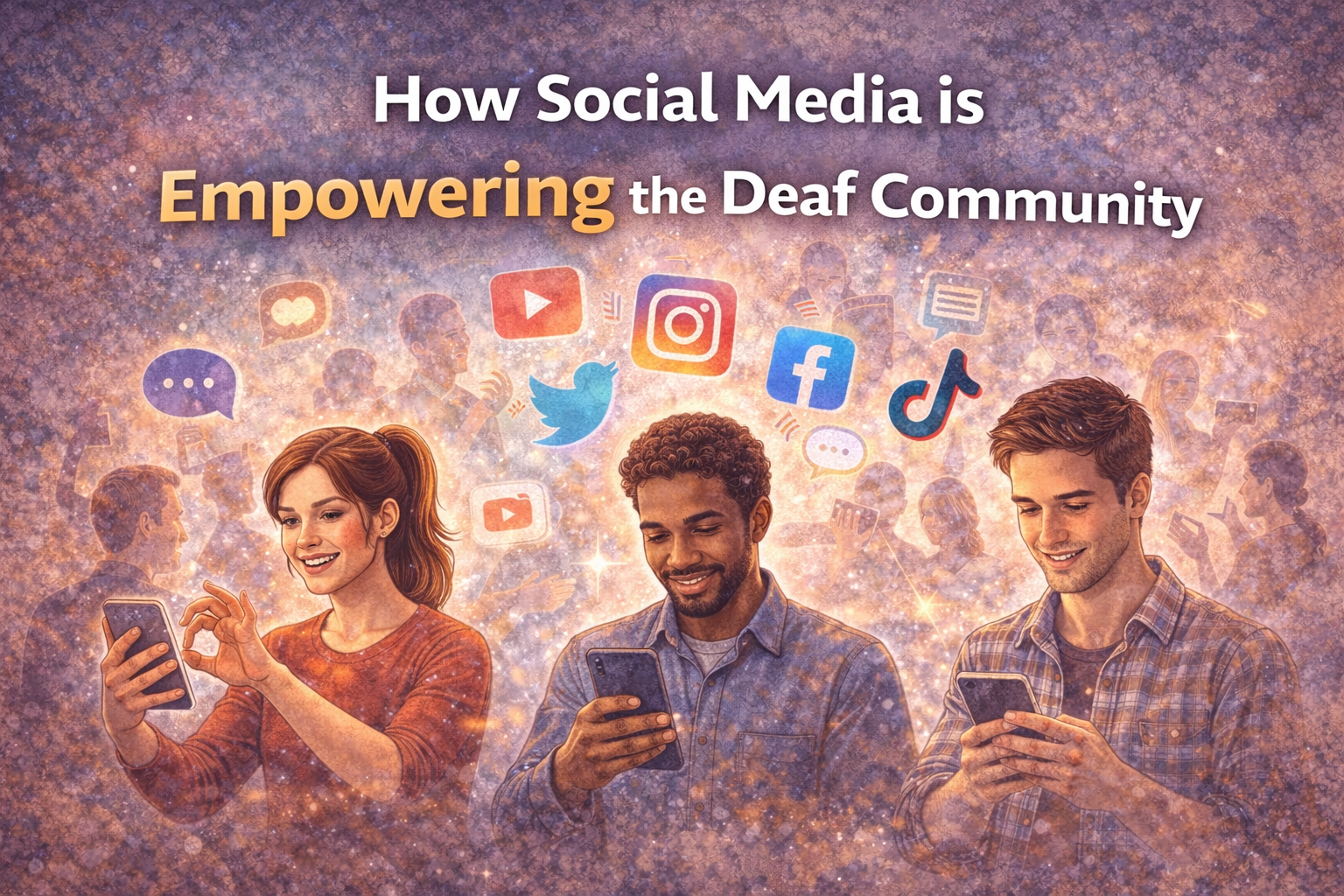
What began as a tool for sharing photos and connecting with friends has become something much bigger. Today, platforms like Instagram, YouTube, TikTok, Facebook, and Twitter are powerful tools for advocacy, education, entrepreneurship, and identity expression within the Deaf community.
Social media is not just entertainment. For many Deaf individuals, it is liberation.
In this article, we explore how social media is empowering the Deaf community, reshaping communication, strengthening identity, and building global connections like never before.
- Amplifying Deaf Voices Without Gatekeepers
Before social media, Deaf stories were often filtered through hearing perspectives. Television shows and news programs rarely featured Deaf creators. When they did, they were often portrayed through stereotypes.
Social media changed that dynamic completely.
Now, Deaf creators can tell their own stories directly to audiences. No permission required. No intermediaries. No distortion.
Through video content, sign language storytelling, live streams, and captions, Deaf individuals are:
• Sharing personal experiences
• Educating about Deaf culture
• Challenging harmful myths
• Advocating for accessibility
• Showcasing talent and creativity
This direct access to audiences has shifted power. Deaf individuals no longer have to wait for representation—they create it themselves.
- Making Sign Language Visible Worldwide
One of the most powerful impacts of social media is the visibility of sign language.
In the past, many hearing people had little exposure to sign language. Today, short-form video platforms have introduced millions to signing.
Deaf creators post:
• Sign language lessons
• Daily vlogs in sign language
• Comedy skits
• Poetry and storytelling
• Educational content
These videos normalize sign language as a complete and expressive language. They break the misconception that sign language is merely gestures or simplified communication.
Social media has made sign language visible, respected, and celebrated.
- Building a Global Deaf Community
The Deaf community has always been strong locally, but geography once limited connection.
Today, a Deaf teenager in India can connect with a Deaf educator in the United States. A Deaf artist in Brazil can collaborate with a signer in Japan. Borders no longer define community.
Social media allows Deaf individuals to:
• Share cultural experiences
• Learn different sign languages
• Participate in international discussions
• Find role models
• Build friendships
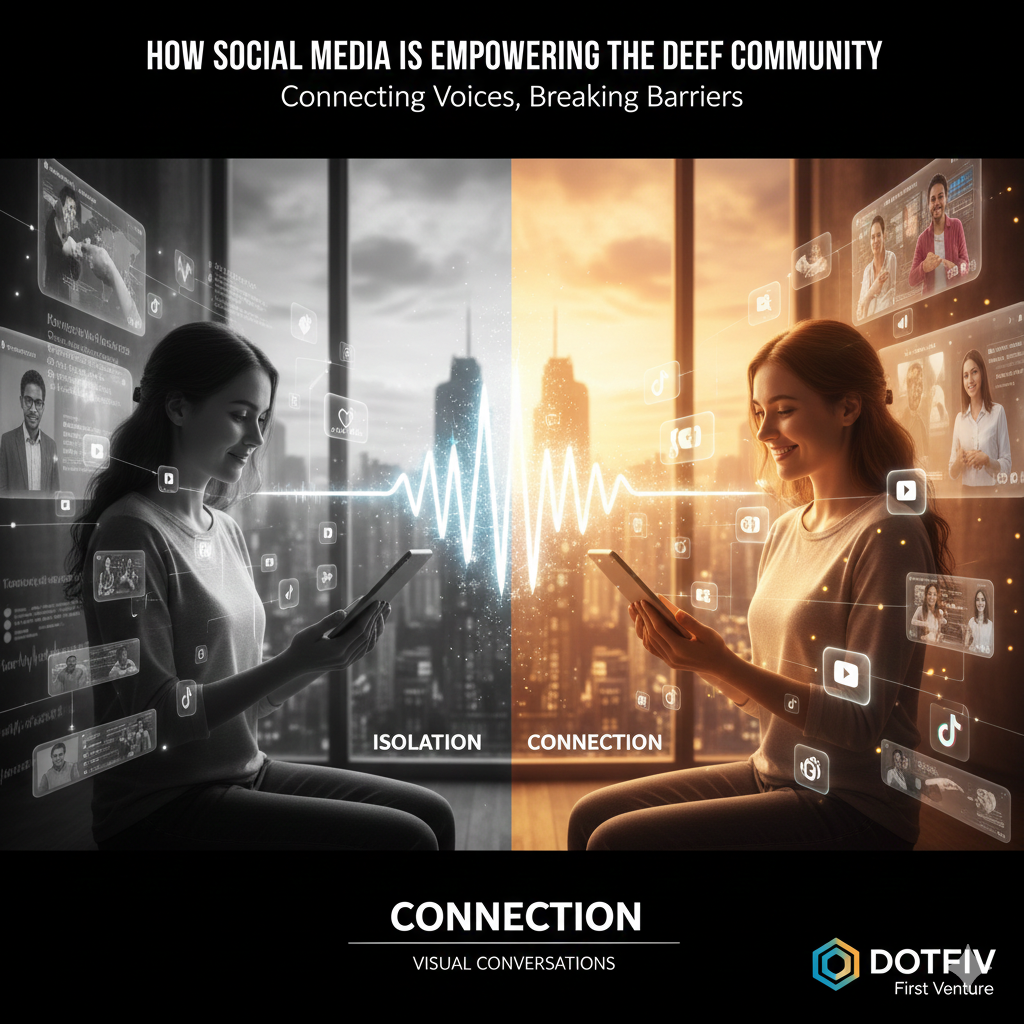
This global connectivity strengthens identity and reduces isolation.
- Reducing Social Isolation
Many Deaf individuals grow up in hearing families where no one else signs. This can create feelings of loneliness or misunderstanding.
Social media offers connection.
Through Deaf-focused groups, forums, and creator communities, individuals can find:
• People who share similar experiences
• Advice about education or career
• Emotional support
• Humor that resonates
This sense of belonging is powerful. It reinforces that being Deaf is not a limitation—it is an identity shared by millions worldwide.
- Educating Hearing Audiences
Empowerment is not only internal—it also transforms external perception.
Many Deaf influencers use social media to educate hearing audiences about:
• Why “deaf and dumb” is offensive
• The importance of captions
• Differences between Deaf and hard of hearing
• Hearing privilege
• Accessibility rights
When hearing individuals learn directly from Deaf voices, understanding improves. Misconceptions decrease. Respect grows.
Education becomes accessible and personal.
- Creating Economic Opportunities
Social media is also an economic tool.
Deaf creators now build careers as:
• Content creators
• Motivational speakers
• Educators
• Consultants
• Entrepreneurs
• Artists
Brands increasingly collaborate with Deaf influencers to promote inclusion and accessibility. This visibility creates income opportunities and breaks employment barriers that have historically affected Deaf individuals.
Digital platforms level the playing field.
- Advocacy and Activism in the Digital Age
Social media has become a space for activism.
When accessibility laws are violated, when captions are missing, or when discrimination occurs, Deaf communities mobilize online.
Campaigns for:
• Better captioning
• Interpreter access
• Inclusive policies
• Equal education rights
Spread quickly across platforms.
Hashtags amplify messages. Viral videos highlight injustice. Organizations gain attention and support.
Digital activism accelerates change.
- Challenging Stereotypes and Media Misrepresentation
For years, mainstream media often portrayed Deaf characters inaccurately or used hearing actors to play Deaf roles.
Social media allows Deaf creators to counter these portrayals.
They showcase:
• Professional success
• Humor and personality
• Parenting and relationships
• Travel and adventure
• Academic achievements
This authentic representation dismantles stereotypes that Deaf individuals are helpless or dependent.
Reality replaces misconception.
- Improving Accessibility Awareness
As more Deaf creators speak about accessibility, hearing audiences become more conscious of inclusion practices.
Captions are now more common on videos. Many influencers automatically include subtitles because audiences expect them.
Businesses also respond. Companies realize that accessibility is not charity—it is smart communication.
Social media has made accessibility visible and valued.
- Encouraging Confidence in Deaf Youth
Young Deaf individuals often struggle with self-confidence, especially in environments dominated by hearing peers.
Seeing successful Deaf role models online changes that narrative.
When a child watches a Deaf lawyer, comedian, athlete, or scientist sharing content proudly in sign language, it sends a powerful message:
“You can succeed too.”
Representation builds confidence. Confidence builds ambition.
- Preserving and Celebrating Deaf Culture
Deaf culture includes traditions, humor, storytelling styles, and social norms unique to the community.
Social media helps preserve this culture by:
• Documenting stories
• Sharing historical moments
• Teaching cultural etiquette
• Celebrating Deaf history
Digital archives ensure that cultural knowledge continues to thrive across generations.
- Technology Enhancing Communication
AI-powered captioning, video-based communication, and visual storytelling tools enhance accessibility online.
Live captions, translation tools, and visual interfaces make digital spaces more inclusive than ever before.
While not perfect, technology continues to improve.
And social media often drives those improvements by highlighting gaps.
- Challenges Still Remain
Despite progress, barriers still exist:
• Inaccurate auto-captions
• Algorithm bias
• Limited sign language recognition technology
• Online harassment
Empowerment does not mean the struggle is over. It means the community now has stronger tools to advocate for change.
- Social Media as Identity Affirmation
For many Deaf individuals, social media is where identity flourishes.
It is a space where sign language is normal. Where eye contact and visual communication are celebrated. Where Deaf culture is understood without explanation.
This digital environment affirms identity in ways traditional systems often fail to do.
- The Future of Deaf Empowerment Online
The future looks promising.
As technology advances and awareness grows, social media will likely become even more accessible and inclusive.
We can expect:
• Better AI captioning
• Sign language recognition technology
• Increased Deaf representation in mainstream media
• More inclusive digital policies
Empowerment will continue evolving.
Conclusion: More Than a Platform
Social media is not just a communication tool for the Deaf community. It is a revolution.
It amplifies voices once unheard. It builds global connections. It challenges stereotypes. It creates economic opportunity. It strengthens identity. It educates society.
Most importantly, it shifts power.
Deaf individuals are no longer waiting to be included. They are shaping the conversation themselves.
In a world that once centered hearing communication, social media has created space for visual language, cultural pride, and authentic representation.
And that space continues to grow.