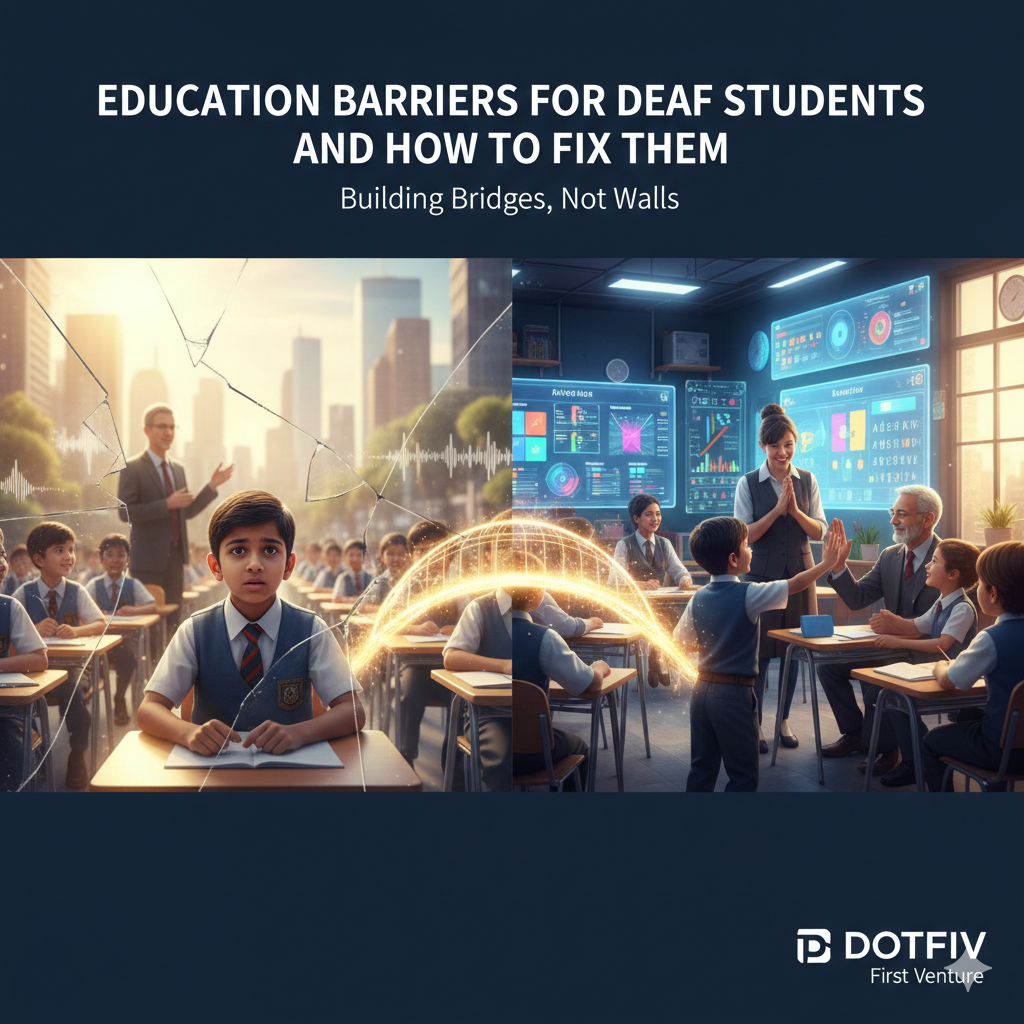
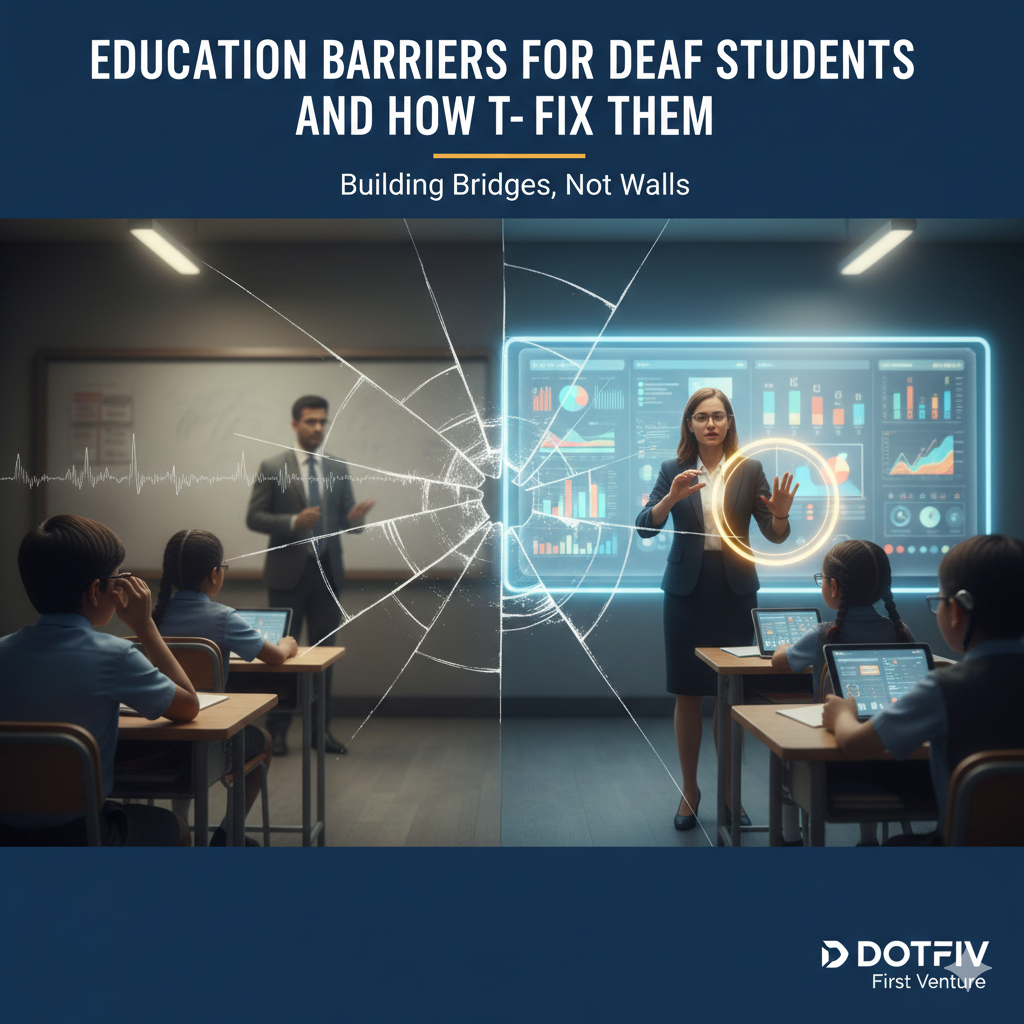
Education Barriers for Deaf Students and How to Fix Them: Building an Inclusive Learning System for All
Education is often described as the foundation of opportunity. It opens doors, shapes futures, and empowers individuals to build independent lives. But for many Deaf students around the world, education does not always feel like a bridge to opportunity. Instead, it can feel like a barrier filled with obstacles that hearing students rarely experience.
Understanding the education barriers for Deaf students is the first step toward meaningful change. These barriers are not caused by Deafness itself. They are caused by systems that were not designed inclusively.
This article explores the most common challenges Deaf students face and, more importantly, how schools, educators, policymakers, and communities can fix them.
Understanding Deaf Students in Education
Deaf students are not a uniform group. Some use sign language as their primary language. Others may use hearing aids, cochlear implants, lip reading, or a combination of communication methods. Some grow up in Deaf families fluent in sign language, while others are born into hearing families with little exposure to Deaf culture.
Every Deaf student has unique learning needs. The real issue is whether the education system adapts to meet those needs.
The Language Barrier in Early Education
One of the most significant challenges Deaf children face begins early in life — language access.
Most hearing children are exposed to spoken language from birth. They overhear conversations, absorb vocabulary naturally, and develop language skills effortlessly. Deaf children, especially those born to hearing parents, may not receive full language exposure in their early years.
Without early access to sign language or other accessible communication methods, Deaf children may experience language delays. These delays can affect reading, writing, and overall academic development.
How to fix it:
• Provide early sign language education for Deaf children
• Offer sign language training to parents
• Promote bilingual education models (sign language + written/spoken language)
• Encourage early intervention programs
Language access is not optional. It is foundational.
Lack of Qualified Sign Language Interpreters
In many mainstream schools, Deaf students rely on sign language interpreters to access classroom instruction. However, qualified interpreters are not always available. Even when they are, there may be only one interpreter for multiple students or classes.
This creates serious learning gaps.
Without accurate interpretation, Deaf students miss information, context, jokes, side comments, and group discussions.
How to fix it:
• Increase funding for interpreter training programs
• Ensure interpreter availability in all classes
• Maintain proper interpreter-to-student ratios
• Include interpreters in lesson planning when possible
Access to communication equals access to knowledge.
Limited Teacher Training
Many teachers receive little or no training in Deaf education or inclusive classroom strategies. As a result, they may unintentionally exclude Deaf students.
Examples include:
• Speaking while facing the board
• Showing videos without captions
• Conducting rapid group discussions
• Not sharing written materials
Teachers often want to help but lack the tools.
How to fix it:
• Provide mandatory accessibility training for educators
• Offer workshops on inclusive teaching strategies
• Teach basic sign language skills
• Encourage collaborative planning with special education staff
Teacher awareness transforms classrooms.
Inaccessible Learning Materials
Educational materials are frequently designed with hearing students in mind.
Common issues include:
• Videos without captions
• Audio-based assignments
• Fast-paced lectures
• Group discussions without visual structure
• Textbooks with complex language structures
Deaf students may struggle not because they lack intelligence, but because materials are inaccessible.
How to fix it:
• Caption all video content
• Provide transcripts for audio materials
• Use visual aids and slides
• Share written notes in advance
• Use clear and structured language
Accessible materials benefit everyone.
Social Isolation in School
Education is not just academic. It is social.
Deaf students in mainstream schools may feel isolated from hearing peers. Communication gaps can make it difficult to form friendships. Social exclusion can affect confidence, mental health, and academic motivation.
Some Deaf students report feeling invisible in classrooms.
How to fix it:
• Promote sign language clubs
• Encourage peer learning and inclusion programs
• Teach hearing students about Deaf culture
• Foster inclusive extracurricular activities
• Create safe spaces for Deaf students
Inclusion must extend beyond academics.
Limited Access to Higher Education
Deaf students face additional challenges in colleges and universities.
Common barriers include:
• Inconsistent interpreter services
• Lack of captioned lectures
• Limited awareness among professors
• Inaccessible online learning platforms
These barriers can discourage higher education participation.
How to fix it:
• Mandate accessibility standards in higher education
• Offer remote interpreting services
• Caption all recorded lectures
• Ensure digital platforms meet accessibility guidelines
• Provide disability resource centers
Equal opportunity must continue beyond primary school.
Technology Gaps
Assistive technology can greatly enhance accessibility, but not all schools provide it.
Helpful technologies include:
• Real-time captioning software
• Video relay services
• Visual alert systems
• Speech-to-text apps
• Interactive whiteboards
When schools lack funding, Deaf students suffer.
How to fix it:
• Allocate budgets for assistive technology
• Partner with technology providers
• Train staff on using accessibility tools
• Regularly update equipment
Technology can close gaps — if used properly.
Bias and Low Expectations
Sometimes the greatest barrier is attitude.
Some educators may underestimate Deaf students’ abilities. Low expectations can limit academic growth and confidence.
Deaf students are fully capable of excelling in mathematics, science, literature, art, and leadership roles.
How to fix it:
• Promote high academic standards
• Highlight successful Deaf professionals
• Encourage leadership opportunities
• Avoid stereotyping
Belief shapes outcomes.
Policy and Systemic Barriers
In some regions, policies do not strongly enforce accessibility requirements. Schools may lack accountability for failing to provide accommodations.
Systemic change requires policy reform.
How to fix it:
• Strengthen disability rights legislation
• Monitor school compliance
• Provide government funding for accessibility
• Involve Deaf communities in policy decisions
Inclusion should be legally protected.
Mental Health Challenges
Repeated barriers can affect mental health.
Deaf students who constantly struggle to access information or form social connections may experience:
• Anxiety
• Frustration
• Depression
• Low self-esteem
Mental health support must be accessible too.
How to fix it:
• Provide counselors trained in Deaf communication
• Offer sign language interpreters in therapy
• Promote peer support groups
• Create inclusive wellness programs
Education must nurture emotional well-being.
The Importance of Bilingual-Bicultural Education
Many experts support bilingual-bicultural (Bi-Bi) education models. These programs teach Deaf students using sign language as the primary language while also teaching written or spoken language as a second language.
Benefits include:
• Strong language foundation
• Cultural identity development
• Improved academic performance
• Greater confidence
Recognizing sign language as a legitimate language is critical.
The Role of Parents
Parents play a powerful role in educational success.
Hearing parents of Deaf children may feel overwhelmed initially. Providing support, education, and community connections helps families thrive.
Schools can:
• Offer sign language classes for parents
• Create parent support networks
• Share accessible resources
• Encourage family involvement
Family inclusion strengthens student outcomes.
Inclusive Classroom Strategies
Simple classroom adjustments make a significant difference.
Effective strategies include:
• Circular seating arrangements
• Visual schedules
• Clear turn-taking rules
• Slower-paced discussions
• Frequent comprehension checks
Inclusion does not always require expensive solutions. Sometimes it requires thoughtful design.
Online Learning and Accessibility
The rise of digital education has introduced new challenges.
Common issues include:
• Uncaptioned webinars
• Audio-only instructions
• Inaccessible platforms
• Rapid live discussions
How to fix it:
• Use platforms with built-in captioning
• Provide recorded sessions with transcripts
• Allow flexible participation methods
• Test platforms for accessibility
Digital inclusion is modern inclusion.
Building Deaf Representation in Education
Representation matters.
Having Deaf teachers, administrators, and mentors creates powerful role models. It also ensures that policies reflect lived experiences.
Encouraging Deaf individuals to pursue education careers strengthens the system.
Community Collaboration
Real change requires collaboration between:
• Schools
• Deaf communities
• Families
• Government bodies
• Technology providers
Inclusion is a shared responsibility.
The Economic Impact of Inclusive Education
Accessible education is not only ethical — it is economically smart.
When Deaf students receive quality education:
• Employment opportunities increase
• Economic independence improves
• Communities benefit
• Innovation grows
Exclusion limits potential. Inclusion multiplies it.
A Vision for the Future
Imagine a classroom where:
• Every video has captions
• Every teacher understands basic sign language
• Interpreters are readily available
• Students communicate confidently
• Deaf culture is respected
• Accessibility is automatic
This future is possible.
But it requires intention.
Final Thoughts
Education barriers for Deaf students are not inevitable. They are solvable.
The challenge is not Deafness.
The challenge is systems that were built without inclusion in mind.
When schools commit to accessibility, train teachers, fund interpreters, embrace technology, and promote respect, education transforms.
Education should never be a barrier.
It should always be a bridge.
And when we build that bridge correctly, every student — Deaf or hearing — can cross it with confidence.