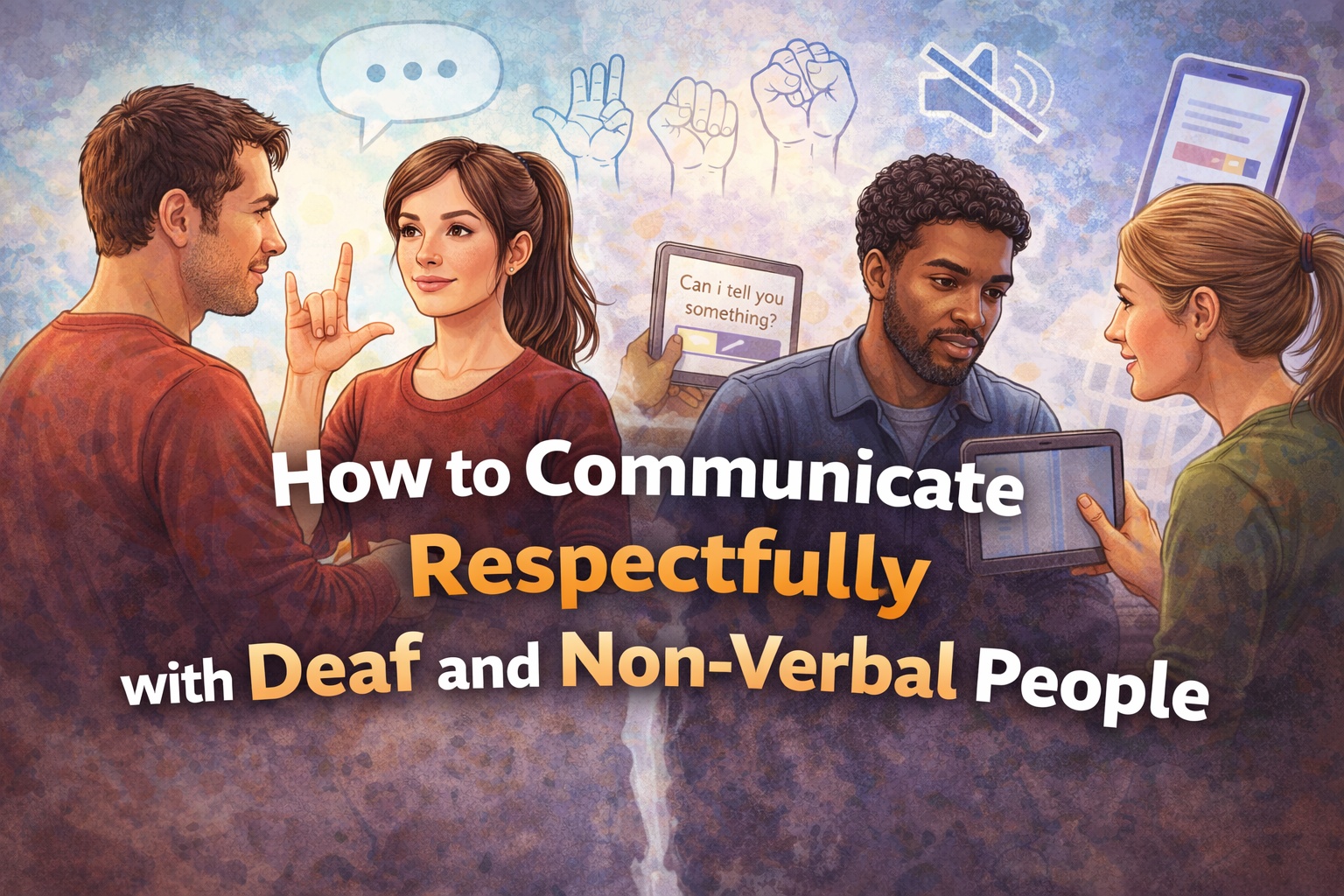
How to Communicate Respectfully with Deaf and Non-Verbal People: A Practical Guide to Inclusive and Empathetic Interaction
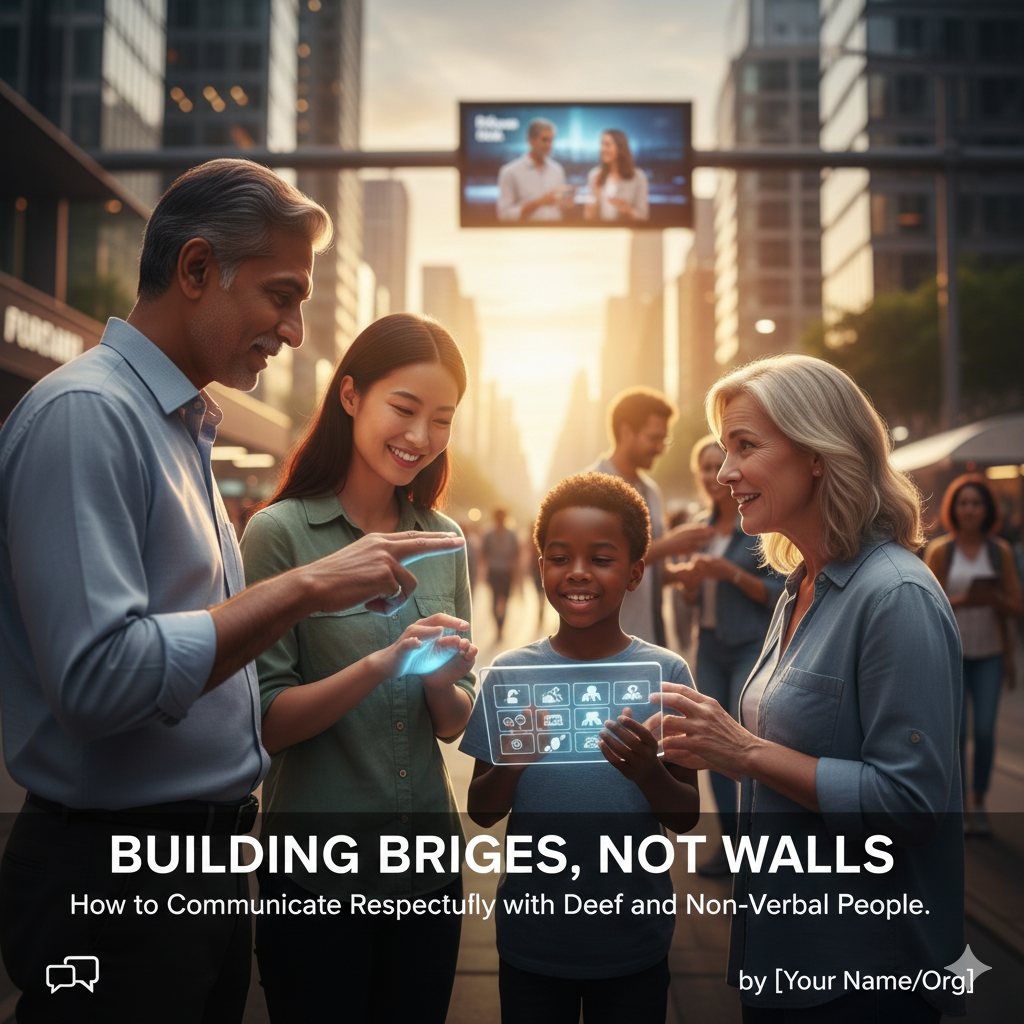
Communication is something most of us take for granted. We speak, we listen, we respond — often without thinking about how effortless it feels. But for millions of Deaf and non-verbal individuals around the world, communication is not always straightforward. It requires understanding, patience, creativity, and above all, respect.
Learning how to communicate respectfully with Deaf and non-verbal people is not about memorizing a set of rules. It is about developing awareness, empathy, and inclusive habits that make interactions comfortable and empowering for everyone involved.
This guide will help you understand the fundamentals of respectful communication, break common misconceptions, and offer practical steps you can use in everyday life.
Understanding Deaf and Non-Verbal Identities
Before learning how to communicate respectfully, it is important to understand who we are talking about.
Deaf individuals may have partial or complete hearing loss. Some use sign language as their primary mode of communication. Others may use hearing aids, cochlear implants, lip reading, or a combination of methods.
Non-verbal individuals are people who do not use spoken language as their primary form of communication. This may be due to hearing differences, neurological conditions, developmental disabilities, or other reasons. Many non-verbal individuals use alternative communication methods such as writing, gestures, assistive devices, or communication boards.
Not all Deaf people are non-verbal. Not all non-verbal people are Deaf. Each individual has unique communication preferences.
The foundation of respectful communication is recognizing that communication differences do not equal limitations.
Why Respectful Communication Matters
Communication is directly tied to dignity and independence. When we dismiss someone’s communication style or fail to make reasonable adjustments, we unintentionally create exclusion.
Respectful communication:
• Builds trust
• Reduces misunderstanding
• Encourages inclusion
• Strengthens relationships
• Promotes equality
On the other hand, impatience, assumptions, or insensitive language can make someone feel isolated or undervalued.
Communication is not just about words. It is about connection.
Common Mistakes People Make
Many communication mistakes come from a lack of awareness rather than bad intentions.
Some common mistakes include:
• Speaking loudly instead of clearly
• Assuming someone cannot understand
• Talking to a companion instead of the person directly
• Using outdated or offensive terms
• Finishing sentences without permission
• Ignoring communication attempts
The key to improvement is mindfulness.
Start with Respectful Language
Language shapes perception.
Avoid outdated terms like “deaf and dumb” or “mute.” These words carry negative connotations and are widely considered disrespectful.
Instead, use:
• Deaf person
• Hard of hearing person
• Non-verbal individual
• Person who uses sign language
• Person who communicates differently
When unsure, ask politely:
“How do you prefer to communicate?”
“Is there a method that works best for you?”
Asking shows respect.
Make Eye Contact and Face the Person
When communicating with a Deaf individual, especially someone who lip reads, visual clarity is crucial.
Follow these simple steps:
• Face the person directly
• Maintain natural eye contact
• Keep your mouth visible
• Avoid covering your face
• Ensure good lighting
Do not exaggerate lip movements. Speak naturally and clearly.
Use Clear and Simple Speech
Shouting does not improve understanding. It may distort lip movements and feel uncomfortable.
Instead:
• Speak at a moderate pace
• Use clear pronunciation
• Pause between sentences
• Avoid unnecessary complexity
If something is not understood, rephrase instead of repeating the same sentence loudly.
Use Written Communication When Needed
Writing can be a powerful bridge.
In situations where speech is ineffective:
• Use a notepad
• Type on your phone
• Use messaging apps
• Use communication boards
Keep sentences simple and direct.
Technology has made written communication easier than ever.
Learn Basic Sign Language
You do not need to become fluent overnight, but learning basic signs can make a huge difference.
Simple signs like:
• Hello
• Thank you
• Please
• How are you?
• Help
show effort and respect.
If you frequently interact with Deaf individuals, investing time in learning sign language demonstrates commitment to inclusion.
Understand Deaf Culture
Deafness is not always viewed as a disability within the Deaf community. Many see it as a cultural and linguistic identity.
Deaf culture includes:
• Shared language (sign language)
• Community events
• Unique social norms
• Strong community bonds
Respect means acknowledging that Deaf identity is not something to “fix.” It is something to value.
Be Patient
Communication may take more time. That is okay.
Avoid:
• Showing frustration
• Checking your phone impatiently
• Interrupting
• Walking away abruptly
Patience communicates respect more than words ever could.
Communicating with Non-Verbal Individuals
Non-verbal individuals may use alternative communication tools such as:
• Augmentative and Alternative Communication (AAC) devices
• Picture exchange systems
• Gesture systems
• Text-to-speech apps
• Eye-tracking devices
If someone uses an AAC device, allow them time to type or select responses. Do not rush them.
The conversation belongs to both of you.
Ask Before Assisting
Never assume someone needs help.
Instead of grabbing a device or interrupting, ask:
“Would you like assistance?”
“Can I help in any way?”
Respect autonomy.
Group Conversations and Inclusion
Group settings can be challenging.
To make conversations inclusive:
• Ensure one person speaks at a time
• Provide captions if possible
• Share written summaries
• Include interpreters when needed
• Make seating arrangements inclusive
Do not let someone become invisible in a group.
Workplace Communication
Professional environments require intentional accessibility.
Employers and colleagues can:
• Provide sign language interpreters
• Offer real-time captioning
• Use accessible meeting platforms
• Share written agendas beforehand
• Encourage inclusive communication policies
Accessibility is not charity. It is equality.
Educational Settings
Teachers can support Deaf and non-verbal students by:
• Providing visual aids
• Using captions
• Sharing written instructions
• Allowing alternative response formats
• Collaborating with specialists
Inclusive education benefits all students.
Digital Communication and Accessibility
Online spaces must also be inclusive.
Best practices include:
• Adding captions to videos
• Providing alt text for images
• Using simple layouts
• Avoiding audio-only instructions
• Offering text alternatives
Digital accessibility is modern respect.
Body Language Matters
Your non-verbal cues communicate volumes.
Maintain:
• Open posture
• Friendly facial expressions
• Attentive body orientation
Avoid:
• Rolling eyes
• Sighing
• Looking distracted
Respect is visible.
Handling Misunderstandings Gracefully
Miscommunication happens. What matters is how you respond.
If confusion arises:
• Stay calm
• Clarify gently
• Use alternative methods
• Avoid blame
A positive attitude makes resolution easier.
Children and Communication
Teach children inclusive habits early.
Encourage them to:
• Make eye contact
• Use gestures kindly
• Be patient
• Avoid teasing or staring
Inclusion starts young.
Emergency Situations
In emergencies:
• Use clear gestures
• Write instructions
• Maintain eye contact
• Stay calm
Preparation and awareness save lives.
The Emotional Side of Communication
For many Deaf and non-verbal individuals, repeated communication barriers can feel exhausting.
Imagine constantly having to explain yourself.
Imagine being misunderstood daily.
Respectful communication reduces that burden.
Small efforts create big emotional impact.
Breaking Stereotypes
Deaf and non-verbal people are:
• Capable professionals
• Creative thinkers
• Leaders
• Artists
• Innovators
Communication differences do not define intelligence or ability.
Focus on ability, not limitation.
What Respect Truly Means
Respect means:
• Listening differently
• Adjusting willingly
• Valuing diversity
• Being patient
• Staying open-minded
It is not about perfection.
It is about intention.
The Ripple Effect of Inclusive Communication
When you communicate respectfully:
• You set an example
• Others follow
• Inclusion grows
• Communities strengthen
One respectful interaction can change someone’s entire day.
Building a More Inclusive World
Inclusion is built conversation by conversation.
It is built when:
• A teacher learns basic signs
• A manager provides captions
• A friend waits patiently
• A stranger writes instead of shouting
Communication is powerful.
Final Thoughts
Learning how to communicate respectfully with Deaf and non-verbal people is not complicated. It requires awareness, empathy, and a willingness to adapt.
You do not need perfect skills.
You need a respectful mindset.
When we remove communication barriers, we create belonging.
When we listen differently, we connect more deeply.
When we choose inclusion, we build a world where everyone’s voice — spoken or unspoken — is valued.
Respectful communication is not just about accessibility.
It is about humanity.